I’m Happy I Stopped Ashwagandha
The following is for educational and informational purposes, and is not medical advice. It is my personal experience with ashwagandha including documented facts and some anecdotal evidence.
When I heard that the adaptogenic benefits of ashwagandha included stress reduction and muscle building, I was interested. So, naturally, I started taking it. The daily dose was 1,000mg of ashwagandha that included 600mg of the patented extract KSM-66. The benefits against stress were noticeable, but after taking it for over a year I started to realize that I wasn’t laughing at TV shows and memes that I usually find funny, and recognized there was a problem. Unfortunately, I didn’t realize it may have been related to ashwagandha, so I kept taking it. Once I heard that consuming it over time could lead to anhedonia in some people, I started doing additional homework on it. Put simply, anhedonia means that you’re not able to enjoy anything. (I was not officially diagnosed, but saw enough in my day-to-day). Let’s discuss how ashwagandha may cause anhedonia in some people, and what I did about it.
When Stress Relief Becomes Emotional Flatlining
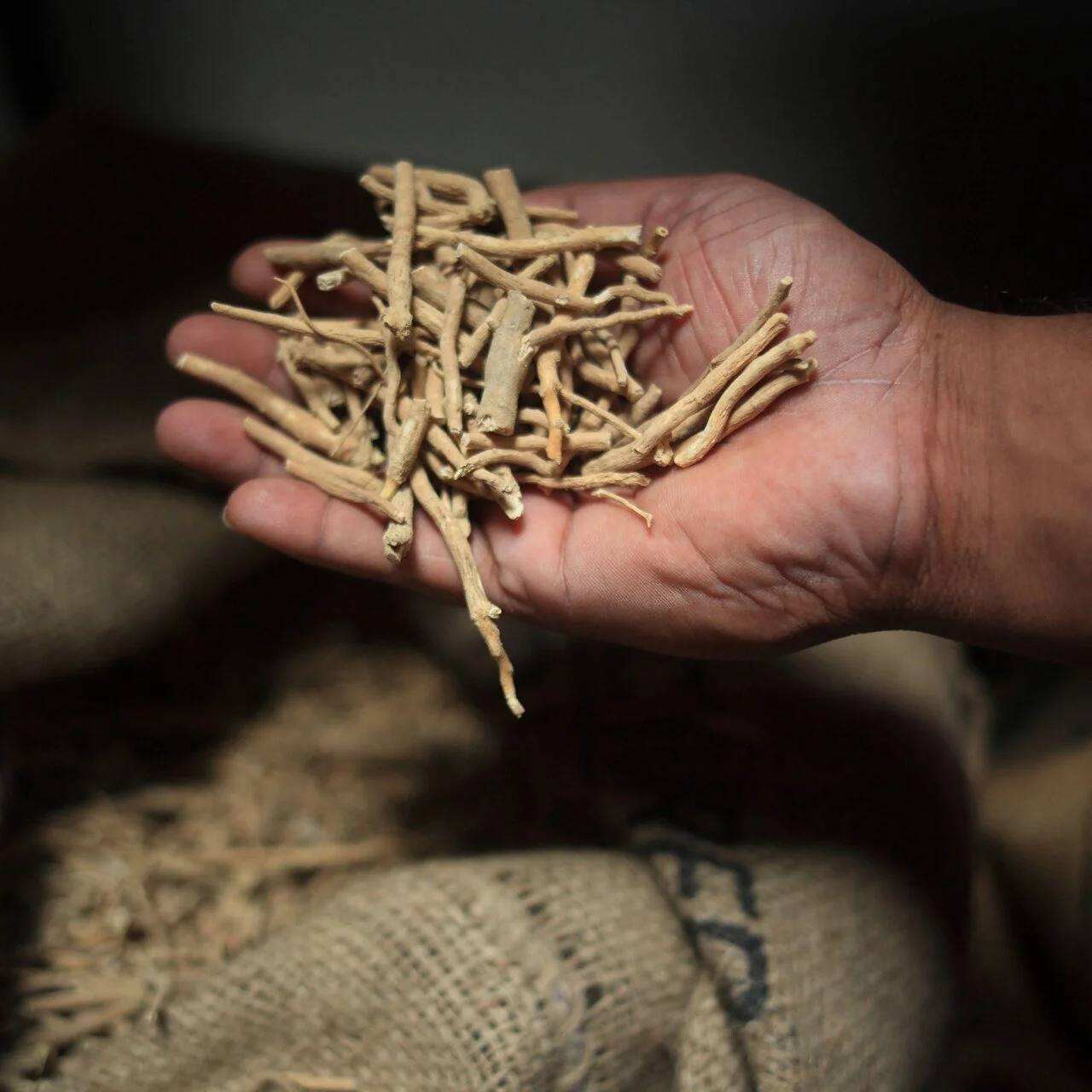
Ashwagandha’s reputation rests largely on lowering cortisol. In randomized trials, standardized extracts can reduce serum cortisol by roughly 20–30% in chronically stressed adults, translating into calmer evenings and better sleep. But there is a meaningful difference between modulating the stress response and suppressing the hypothalamic-pituitary-adrenal (HPA) axis into hypofunction.
A 2022 case report in Toxicology and Environmental Health Sciences described a 41-year-old woman who developed adrenal hypofunction after only ten weeks of daily ashwagandha (858 mg of extract delivering 21.4 mg withanolides). Her morning cortisol fell sharply, and an ACTH stimulation test revealed a minimal adrenal response. After a two-week washout, her cortisol response normalized completely. More recently, a 2026 case in Endocrinology, Diabetes & Metabolism Case Reports documented a 55-year-old woman consuming approximately 950 mg daily for over a year; she presented with Cushingoid features and low basal cortisol, and her HPA axis remained suppressed for months after she stopped.
Cortisol is not merely a “stress hormone.” It helps potentiate dopamine release in the mesolimbic reward pathway and maintains the diurnal rhythm that drives motivation. When chronic ashwagandha use pushes cortisol too low, the result can be a flattening of emotional affect and reward sensitivity—the clinical hallmarks of anhedonia.
The Serotonin and Dopamine Mechanisms
Beyond the HPA axis, chronic ashwagandha appears to remodel neurotransmitter receptor dynamics. A 1998 peer-reviewed animal study in Ancient Science of Life found that rats given ashwagandha root extract for four to eight weeks developed a moderate but significant supersensitivity of 5-HT2 receptors and a reciprocal subsensitivity of 5-HT1A receptors. The researchers also observed depleted dopamine and acetylcholine alongside increased whole-brain serotonin.
These shifts matter because 5-HT1A receptors help govern emotional depth, social bonding, and oxytocin release. When their sensitivity is reduced, emotional experiences can feel muted. Meanwhile, depleted dopamine directly undermines the brain’s reward circuitry. The study authors noted that these neurochemical adaptations paralleled changes seen with chronic electroconvulsive therapy and certain antidepressants—interventions also known to cause emotional blunting in susceptible individuals.
Assessing Your Risk
Not everyone who takes ashwagandha will develop anhedonia. Documented cases suggest a pattern: prolonged daily use, higher standardized doses, and possibly lower baseline cortisol. If you are stacking ashwagandha with other GABAergic or cortisol-lowering supplements, the risk of oversuppression likely increases.
For high-performing professionals who rely on mental sharpness and emotional range, the strategy should be tactical rather than habitual. Treat adaptogens as tools for intense training blocks or high-stress seasons, not as indefinite daily maintenance. Cycling off, monitoring your morning motivation, and reassessing every eight to twelve weeks can help preserve the benefits while protecting your neurochemical baseline.
Inconveniently for some people (myself included), you might not simply be able to stop taking ashwagandha and have its blunting effects simply stop, you’d have to rebuild what it leveled. To come back from feeling flatlined in my enjoyment of things, I started taking methylene blue and maca root, which has been successful. I hope this personal tale, and deeper homework session can be useful to you.
Supporting Materials
Fry, C. H., Fluck, D., & Han, T. S. (2022). Adrenal hypofunction associated with ashwagandha (Withania somnifera) supplementation: a case report. Toxicology and Environmental Health Sciences, 14, 141–145. https://doi.org/10.1007/s13530-022-00122-z
Javid, J., Kunnuru, S. R., Anne, B., & Muskan, S. (2026). From herbal hope to hormonal havoc: chronic ashwagandha use and HPA axis suppression. Endocrinology, Diabetes & Metabolism Case Reports, 2026(1), EDM250076. https://doi.org/10.1530/EDM-25-0076
Tripathi, A. K., Dey, S., Singh, R. H., & Dey, P. K. (1998). Alterations in the sensitivity of 5th receptor subtypes following chronic asvagandha treatment in rats. Ancient Science of Life, 17(3), 169–181. https://www.ncbi.nlm.nih.gov/pmc/articles/PMC3331105/